
Venus Flytrap Care: The Complete Guide to Growing Dionaea muscipula Indoors
Picture a six-year-old at a gas station, staring at a plastic cup with a label that says "Venus Flytrap" and a cartoon fly on the side. That was me, basically — except I was twelve and it was my abuela handing me a Sarracenia purpurea wrapped in a damp paper towel on a flight from Puerto Rico. Same energy. Same doomed optimism. I killed that plant in two months. Tap water, a dark windowsill, and zero understanding of what the thing actually needed.
Venus flytrap care has a reputation for being brutal. That reputation is mostly deserved — but not for the reasons most people think. Dionaea muscipula doesn't die because it's fragile. It dies because almost everything we instinctively do for plants is wrong for this one. Standard potting mix? Toxic. Tap water? Slow poison. Feeding it every week because it's a carnivore? That's how you exhaust it. The good news is that once you understand why the rules are what they are, they stop feeling arbitrary and start feeling obvious.
This guide covers everything: water chemistry, light intensity, dormancy, feeding, soil, pests, and growing from seed. By the end, you'll have a clear picture of what this plant actually needs to thrive.
Why Venus Flytraps Fail (And How to Avoid It)
Most people buy a Venus flytrap on impulse — a hardware store, a garden center, sometimes a grocery store checkout line. The plant looks otherworldly. The traps snap shut when you poke them. You bring it home, set it on a kitchen windowsill, water it from the tap, and watch it slowly collapse over the next four to six weeks while you search increasingly desperate terms like "venus flytrap dying."
I've been there. I've also watched it happen to plants I should have known better with. The failure pattern is almost always the same, and it almost always starts with water.
The Tap Water Trap: Why TDS Matters More Than You Think
Total dissolved solids (TDS) is a measure of the minerals, salts, and metals dissolved in water. Tap water in most cities runs between 100 and 400 parts per million (ppm). That's fine for a tomato plant. For Dionaea muscipula, it's a slow accumulation of mineral salts in the soil that burns roots over weeks and months.
Venus flytraps evolved in the nutrient-poor, waterlogged soils of the North Carolina coastal plain — specifically the longleaf pine savannas near Wilmington. The soil there is so deficient in nitrogen and phosphorus that the plant evolved traps to get nutrients from insects instead. Roots that grew in mineral-rich water would have been selected against. The plant has essentially no tolerance for dissolved solids.
Use only rainwater, distilled water, or reverse osmosis (RO) water. Target a TDS below 50 ppm — ideally below 20. I keep a small TDS meter next to my grow tents and check my RO output once a month. If you're in a city apartment without roof access for rain collection, distilled water from the grocery store works fine and costs almost nothing.
Light vs. Dormancy: The Seasonal Rhythm Most Guides Skip
Venus flytraps need a lot of light — and the amount of light they get is directly tied to whether they enter dormancy in winter. These two things are connected in a way most care guides treat as separate topics. They're not.
In their native habitat, the plants get full Carolina sun from spring through fall, then experience shorter days and cold temperatures in winter. That combination — reduced photoperiod plus temperature drop — triggers dormancy, a period of metabolic slowdown that lets the plant rest and reset. Skip dormancy year after year and the plant weakens gradually, producing smaller and smaller traps until it dies.
The NYBG's own carnivorous plant research notes that while Venus flytraps can be grown indoors without a dormancy period, a winter rest period may benefit the plant long-term. I'd put it more bluntly: skip it once, probably fine. Skip it three years running, and you're on borrowed time.
Common Myths That Kill Plants Faster Than Neglect
The biggest myth is that Venus flytraps need to catch insects to survive. They don't — photosynthesis handles energy production. Feeding accelerates growth but isn't required for survival. Triggering traps repeatedly with your finger to watch them close is a different story: each closure costs the plant energy, and traps that close on nothing useful are wasted resources. A trap that fires five times without catching prey goes black and dies. That's normal. Just stop poking it.
The second myth is that these plants need misting. They don't, unless your ambient humidity is genuinely below 30%. Wet leaves sitting in stagnant air invite fungal rot. More on that in the water section.
Light: What Your Venus Flytrap Actually Needs

Here's where I'll be direct: most windowsills fail. Not because the window is bad, but because window glass filters UV, indoor placement limits the arc of direct sun, and most apartments face the wrong direction for the six-plus hours of intense light these plants want. "Bright indirect light" — advice you'll see everywhere — is how you grow a pothos. It's how you slowly starve a Venus flytrap.
Outdoor vs. Indoor: Why Windowsills Often Fail
Outdoor growing, where climate permits, is the easiest path to healthy Dionaea muscipula. My fire-escape shelf in Brooklyn gets direct southern exposure from late March through October. Plants out there — mostly Sarracenia but a few Dionaea — look completely different from the ones I keep under lights inside. The traps are larger, the coloration is deeper red, and the growth rate is noticeably faster.
For outdoor cultivation, you want USDA zones 5–9 during the growing season. Full sun — at least four to six hours of direct light, with more being better. Protect from hard freezes in winter unless you're intentionally triggering dormancy outdoors.
If you're growing indoors, a south-facing window is your minimum threshold. Even then, measure the light. A simple lux meter will tell you what you're actually working with. Venus flytraps want 2,000–5,000 lux at minimum during the growing season, with 10,000+ lux being ideal.
Grow Lights: Specs, Placement, and Photoperiod Timing
Grow lights solve the windowsill problem cleanly. I use T5 fluorescent fixtures and LED grow panels in my Brooklyn grow tents — the LEDs have largely taken over because they run cooler and the full-spectrum output is excellent for Dionaea.
For LEDs, look for a full-spectrum panel rated for 2,000–3,000 lumens at the plant surface. Distance matters: most LED panels need to sit 6–12 inches above the plant canopy to deliver adequate intensity without burning. T5 fluorescents work well at 4–6 inches. Run lights for 14–16 hours per day during the growing season (spring and summer), then drop to 8–10 hours in fall to begin mimicking the natural photoperiod shift that triggers dormancy.
Seasonal Light Shifts and Dormancy Triggers
Reducing photoperiod in October or November — combined with cooler temperatures — is the most reliable way to trigger dormancy indoors. The plant will start producing smaller, flatter leaves called phyllodia (non-carnivorous leaves) and the traps will shrink. This is normal. Don't panic and increase the light. The plant is doing exactly what it should.
Water: The Single Biggest Mistake
If there's one section of this guide to read twice, it's this one. Water chemistry kills more Venus flytraps than any other single factor. I've seen beautiful, healthy specimens crash in six weeks because someone switched from distilled water to filtered tap. "Filtered" is not the same as "pure" — a Brita removes chlorine and some heavy metals but does almost nothing for dissolved mineral salts.
Why Tap Water Kills Venus Flytraps and What to Use Instead
The mineral salt buildup from tap water is cumulative and invisible until it's too late. Roots turn brown and mushy. The plant stops producing new traps. Old leaves blacken from the tips inward — not from the outside in, the way normal senescence looks, but from the root up. By the time you see it clearly, the damage is done.
Rainwater is ideal. Distilled water from the store is the easiest reliable alternative. RO water works perfectly if you have a home system. Whatever you use, keep TDS below 50 ppm. A cheap TDS meter costs about ten dollars and removes all guesswork.
> WARNING: Never use softened water. Water softeners replace calcium and magnesium ions with sodium ions — and sodium is just as toxic to Dionaea muscipula as the minerals it replaces. Softened water is arguably worse than regular tap.
Watering Frequency: Soil Moisture vs. Standing Water Method
The tray method is the standard for Venus flytrap watering, and it works because it keeps the soil consistently moist without requiring constant attention. Sit the pot in a shallow tray with about an inch of pure water. The soil wicks moisture upward. Refill when the tray runs dry.
During active growth (spring through early fall), the tray can stay wet continuously. In winter dormancy, let the tray dry out between waterings — the plant's metabolic rate drops and wet, cold soil invites rot. Moist but not saturated is the dormancy-season target.
Humidity: Misting Myths and Actual Needs
Venus flytraps don't need high humidity the way a highland Nepenthes does. They're fine at 40–60% relative humidity, which is normal indoor air in most homes. If you're running below 30% — common in dry winter apartments with forced-air heat — a small humidifier near the growing area helps. Misting directly onto the leaves doesn't replicate ambient humidity; it just leaves water sitting on trap surfaces where it can encourage fungal growth. Skip the spray bottle.
Temperature and Winter Dormancy: Non-Negotiable
Dormancy is not optional. I know some sources frame it as a "nice to have," and the NYBG guide notes that Venus flytraps can survive without it indoors. Technically true. But "survive" and "thrive" are different things, and a plant denied dormancy for multiple years is a plant slowly spending down a biological reserve it can't replenish.
The Dormancy Requirement: Why Your Plant Needs Winter Cold
Dionaea muscipula is a temperate carnivorous plant. Its entire lifecycle is calibrated to a seasonal rhythm: vigorous growth in warm months, dormancy in cold ones. During dormancy, the plant consolidates energy, strengthens its root system, and resets the hormonal signals that drive spring growth. Think of it like sleep — you can skip a night or two. Skip it for months, and the deficit catches up with you.
The target temperature range for dormancy is 35–50°F (2–10°C). Not freezing, but genuinely cold. The plant can tolerate light frost if the roots don't freeze solid, but sustained sub-freezing temperatures are dangerous without protection.
Temperature Ranges by Season and Growth Stage
During active growth, Venus flytraps prefer 70–95°F (21–35°C). They handle summer heat well — the Carolina coastal plain gets hot. What they can't handle is heat combined with low light and wet, stagnant air, which is a recipe for fungal rot.
Spring and fall are transitional: 50–70°F is fine and actually encourages some of the best trap development I've seen. The plant is active but not stressed by heat.
How to Trigger and Manage Dormancy Indoors
The simplest indoor dormancy method: move the plant to an unheated space in late October or November. An unheated garage, a cold basement, or a mudroom that stays between 35–50°F works well. Reduce watering. Cut the light to 8 hours or less, or turn grow lights off entirely if the space gets some ambient daylight.
Alternatively, a refrigerator dormancy works for apartment growers with no cold space. Pot the plant in slightly moist sphagnum, seal it in a zip-lock bag with a few air holes, and store it in the crisper drawer at 38–42°F for 3–4 months. Check for mold every two weeks. I've done this with small divisions and it works — the plant emerges in spring looking a little pale but recovers fast under strong light.
Feeding: What Works and What Doesn't
You do not need to feed a Venus flytrap to keep it alive. Photosynthesis provides energy. Feeding provides nitrogen and other nutrients that accelerate growth — the same nutrients the plant's native soil lacks. A well-lit plant with good water will survive indefinitely without a single insect. But feed it correctly and you'll see noticeably larger traps and faster growth over a season.
Do Venus Flytraps Need Insects? The Truth About Feeding
The short answer: no. The longer answer: feeding helps, if you do it right. Each trap can only close and reopen a limited number of times before it dies naturally. A trap that closes on a live cricket, digests it over five to twelve days, and then reopens has done its job. A trap that closes on a piece of hamburger or a dead fly that doesn't move to trigger the digestive response has wasted a closure.
Live or recently killed prey is the most effective option. Crickets, mealworms, small flies — anything that fits inside the trap with room to spare. The prey item should be no larger than one-third the trap's size. Larger prey prevents the trap from sealing completely and leads to rot.
Live Prey vs. Dried Bloodworms: Pros, Cons, and Frequency
Dried bloodworms are a convenient alternative to live insects. They work, with a caveat: you need to manually stimulate the trap's trigger hairs after it closes to activate the digestive response. Use a toothpick to gently press the prey against the interior walls for thirty seconds or so. Without that stimulation, the trap reopens without digesting anything.
Feed each trap no more than once every two to three weeks. Feed no more than two or three traps at a time on a single plant. Overfeeding is a real problem — the plant expends significant energy on digestion, and a plant simultaneously running multiple active digestion cycles is a stressed plant. Underfeeding is almost never a problem for a healthy, well-lit specimen.
When NOT to Feed (Dormancy, Young Plants, Stressed Specimens)
Don't feed during dormancy. The plant's digestive enzymes are essentially offline and prey will rot inside closed traps, leading to blackening and potential infection. Don't feed seedlings under six months old — traps are too small and the energy cost is disproportionate. Don't feed a plant that's showing stress signals: yellowing leaves, slow trap response, or recent repotting shock. Let it stabilize first.
Repotting and Soil: Getting the Medium Right
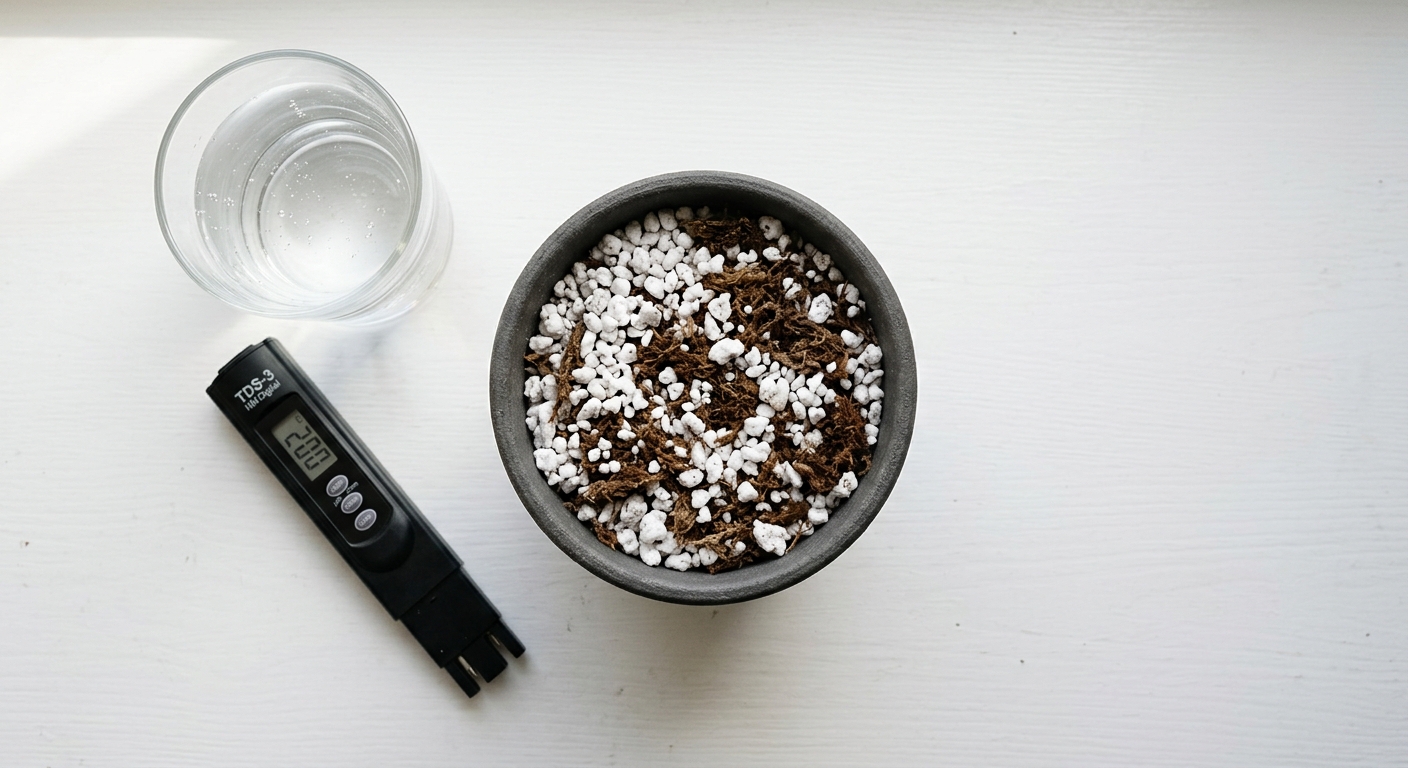
Standard potting mix is death in a bag for Dionaea muscipula. The fertilizers and wetting agents added to commercial potting soil — things that help most plants — are exactly what burns carnivorous plant roots. A Venus flytrap in Miracle-Gro will look okay for a few weeks, then crash hard as the nutrients accumulate.
Soil Composition: Why Standard Potting Mix Kills Them
The correct medium is nutrient-poor, acidic, and fast-draining. The two most reliable mixes are:
- 1:1 peat moss to perlite — the classic. Cheap, reliable, widely available. Use horticultural perlite, not vermiculite (vermiculite contains minerals). Use plain peat moss with no added fertilizers.
- Long-fiber sphagnum moss — excellent for moisture retention and slightly more forgiving. Works well for smaller pots and seedlings.
Some growers use silica sand instead of perlite. It works, but make sure it's silica sand — not builder's sand or beach sand, both of which contain mineral contaminants.
When and How to Repot Without Shocking the Plant
Repot in early spring, just as the plant emerges from dormancy. This is the window when root disturbance is least damaging — the plant is entering its most vigorous growth phase and recovers quickly. Avoid repotting in summer heat or during active trap production. Never repot during dormancy.
Venus flytraps resent root disturbance. Keep handling minimal. If roots are tangled, tease them apart gently rather than pulling. The white rhizome (the bulb-like base) should sit just at or slightly below the soil surface. Plant too deep and the rhizome rots; too shallow and it dries out.
Pot Size and Drainage: Container Selection Matters
Use a pot with drainage holes — always. Standing water in the tray is fine; standing water inside the pot is not. A 4-inch pot is appropriate for a single mature plant. Plastic pots work better than terracotta because terracotta leaches minerals into the soil over time. Deep pots are preferable to shallow ones; Dionaea roots go deeper than most people expect.
Troubleshooting: Pests, Disease, and Stress Signals
Something's wrong with your plant. The first question is always: which of the basics is off? In my experience, 80% of Venus flytrap problems trace back to water quality, light, or soil. Fix those three things and most issues resolve themselves.
Yellowing, Blackening, and Leaf Drop: What Each Means
Yellowing leaves are almost always a water or light issue. Yellow from the base up often signals mineral salt buildup from bad water. Yellow from the tips down often signals insufficient light. A single yellowing trap on an otherwise healthy plant is just normal senescence — traps live for about three to five trap cycles and then die back. That's not a problem.
Blackening traps that spread to the petiole (the leaf stem) are more serious. If it's spreading quickly and the tissue looks wet and mushy, you're looking at bacterial or fungal rot — usually triggered by stagnant humid air, overwatering in winter, or a prey item that wasn't digested properly. Remove affected tissue immediately with clean scissors.
Fungal and Bacterial Issues: Prevention and Response
Fungal issues are the second most common killer I see in collections, after water chemistry. They look like gray or white fuzzy patches, or rapid blackening that spreads from a single point. The fix is airflow — Venus flytraps don't need a terrarium. Open air with good circulation prevents the stagnant moisture that fungi need. If you're growing in an enclosed case, add a small fan.
For active infections, a dilute hydrogen peroxide solution (3% drugstore peroxide diluted 1:4 with distilled water) applied with a cotton swab to affected tissue can stop spread. Remove all visibly infected material first.
Pests (Spider Mites, Fungus Gnats) and Dormancy-Related Problems
Spider mites are the worst pest I've dealt with on Dionaea. They look like fine webbing on leaf surfaces and tiny moving dots. They thrive in hot, dry conditions — which is why summer in a grow tent can invite them. A dilute neem oil spray (mixed with distilled water) works, but apply it carefully and avoid getting it inside open traps.
Fungus gnats are mostly a nuisance rather than a killer, but their larvae can damage roots. The tray method actually helps here — keeping the soil surface moist but not flooded discourages egg-laying. Yellow sticky traps catch adults.
During dormancy, expect the plant to look terrible. Traps die back. Leaves go limp. The whole thing can look like a dead clump of brown tissue. This is normal. The rhizome is alive underground. Don't water it into rot trying to revive it — just wait for spring.
From Seed to Mature Plant: The Long Game
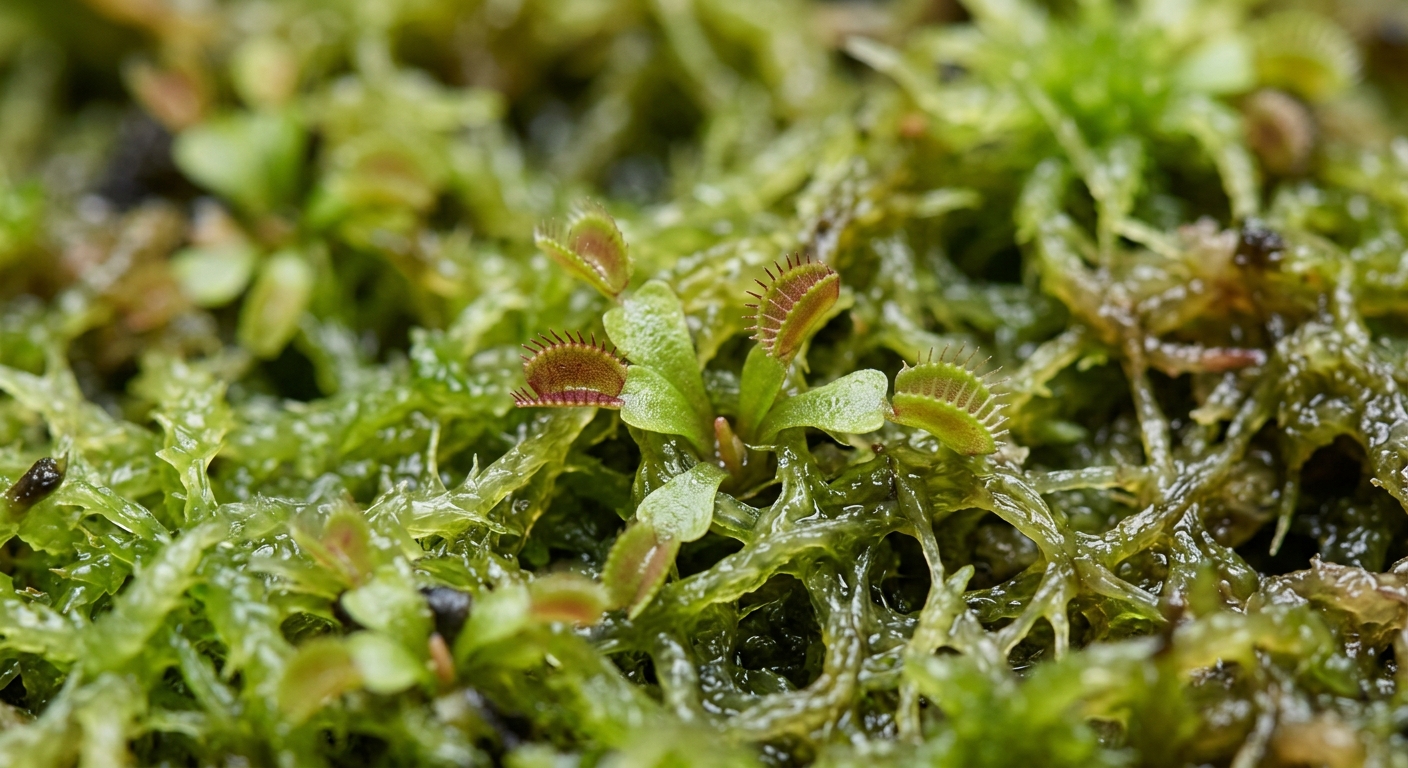
Growing Dionaea muscipula from seed is a test of patience. I mean that literally — you're looking at four to five years from germination to a plant with full-sized adult traps. Most people who try it give up in year two. The ones who stick with it end up with something genuinely satisfying: a plant they built from nothing, with characteristics they selected.
Seed Stratification and Germination: Cold, Moisture, Timing
Venus flytrap seeds require cold stratification before they'll germinate reliably. In nature, seeds drop in fall, sit through winter on moist soil, and germinate in spring when temperatures rise. You replicate this by placing fresh seeds on moist long-fiber sphagnum in a sealed container, then refrigerating at 38–42°F for 30 days. After stratification, move the container to a warm, brightly lit spot. Germination typically takes two to four weeks at room temperature.
Fresh seeds germinate far better than old ones. If you're buying seeds, check the harvest date. Seeds more than a year old have significantly reduced viability.
Seedling Care: The Critical First Year
Seedlings look like tiny green dots for the first few months. They're fragile in ways adult plants aren't — more sensitive to drying out, more susceptible to fungal damping-off, and completely unable to handle any feeding. Keep them under bright light, on a consistently moist medium, in a semi-enclosed environment (a clear plastic dome or a zip-lock tent) to maintain humidity without stagnant air.
The first year is mostly about not killing them. I've lost entire trays of seedlings to a single mold outbreak that spread overnight. Thin any seedlings showing signs of damping-off immediately. Don't crowd them.
Growing Timeline: When to Expect Mature Traps
Year one: seedlings reach about 1 cm across. Tiny traps, barely functional. Year two: plants reach 3–5 cm, traps start to look like real traps. Year three: you have something that resembles a juvenile adult plant. Years four and five: full adult size, with traps reaching 2–3 cm on a healthy specimen under good light. It's a slow burn. Like watching a tree grow — you stop noticing the daily change and then one day you look at the plant and realize it's genuinely impressive.
Getting Venus Flytrap Care Right: The Three Things That Matter Most
After twelve years of growing carnivorous plants — from that first Sarracenia I killed as a kid to the 200-plus specimens I'm managing now — venus flytrap care comes down to three non-negotiables. Pure water, strong light, and a real winter dormancy. Get those three right and the plant is far more forgiving than its reputation suggests. Mess up any one of them consistently and no amount of careful feeding or perfect soil will save it.
The soil and feeding details matter, but they're secondary. I've grown healthy Dionaea muscipula in plain long-fiber sphagnum with zero feeding because the light was strong and the water was clean. I've also watched beautifully fed, carefully potted plants collapse because someone filled the tray with tap water for two months.
Start with a TDS meter and a bag of distilled water. Get your light situation sorted — outdoor if possible, a decent grow light if not. Plan for dormancy before you need it, not after the plant starts declining. Do those things and you'll be ahead of 90% of first-time growers. The rest is just learning the plant, one season at a time.
For more on the native range and conservation status of Dionaea muscipula, the NYBG carnivorous plant research guide is worth bookmarking.
FAQ
What water should I use for a Venus flytrap?
Use only rainwater, distilled water, or reverse osmosis (RO) water with a TDS (total dissolved solids) reading below 50 ppm. Tap water contains dissolved mineral salts that accumulate in the soil and damage roots over time. Never use softened water — it replaces calcium and magnesium with sodium, which is equally toxic to Dionaea muscipula.
